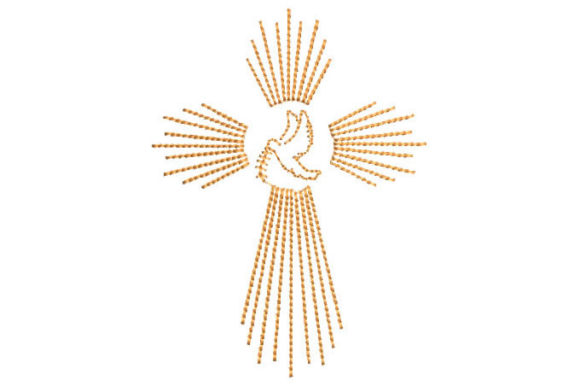
Cross with Dove
First Impression: Serene, Timeless, and Booth-Ready
As an embroidery designer who’s prepped over 200 craft fair booths—and shipped thousands of handmade products—I opened Cross with Dove expecting quiet strength. That’s exactly what I got. It’s not flashy or trendy; it’s serene, reverent, and instantly legible at three feet. No cartoonish elements, no forced whimsy—just clean religious symbolism fused with soft peace motifs. That makes it a rare find: a design that reads as both elegant and handmade, fitting seamlessly into farmhouse kitchens, boutique gift tables, and faith-based artisan markets.
Where Cross with Dove Shines on Craft Fair Products
This isn’t a one-product design—it’s a versatile anchor for multiple handmade categories. Here’s how it performs across real-world items:
- Tote bag design: Works beautifully centered on the front panel (8–10" wide). The cross provides vertical structure; the dove adds gentle movement—ideal for shoppers scanning booths from a distance.
- Apron embroidery: Perfect above the pocket or centered on the bib. Its balanced proportions avoid visual heaviness, and the dove softens the formality—making it feel warm, not stern.
- Tea towel embroidery: A standout on linen or cotton towels. The design holds up against kitchen texture and laundering when stitched with quality thread and light stabilizer.
- Embroidered patch: Highly effective at 3–4" wide. Clean lines translate well to iron-on or sew-on formats—great for church bazaars, confirmation gifts, or small shop product bundles.
- Pillow cover & fabric pouch: Adds quiet luxury. Customers consistently pause longer at pillows with Cross with Dove—it signals intentionality and care, elevating perceived value without raising price points.
- Caps & curved surfaces: Use caution. The dove’s wing detail may distort on low-profile caps unless digitized with reduced stitch density and careful underlay. Test first.
What Makes Cross with Dove Sell—Beyond Symbolism
Selling at craft fairs isn’t just about meaning—it’s about momentary clarity. Cross with Dove delivers that. In under two seconds, shoppers grasp its purpose: faith, peace, love. That speed matters when you’re competing with glitter, wood signs, and scented candles. It also photographs exceptionally well—no muddy shadows, no lost details in natural light—making it a strong printable mockup asset for Etsy sellers and digital embroidery file listings.
For batch production? Yes—it’s repeatable. Moderate stitch density (not overly dense), no micro-lettering or hair-thin outlines, and symmetrical layout mean fewer thread breaks and consistent hooping. That translates directly to lower labor cost per finished product.
Careful-Use Notes Every Embroidery Designer Should Know
Even beautiful designs have limits. Here’s where attention is non-negotiable:
- Dense stitch areas: The dove’s body and cross arms may cluster tightly—check spacing in your embroidery software. Over-stitching here risks puckering on lightweight cotton or textured tea towels.
- Small details on dark fabric: The dove’s eye or wing feathering can vanish on navy or charcoal. Boost contrast with metallic silver or ecru thread—not just white.
- Curved cap surfaces: Avoid placing the full design across the front curve. Instead, scale down to 2.5" and position it cleanly on the crown or side panel.
- Textured towels: Use tear-away + light cutaway stabilizer combo. Skip heavy fusibles—they mute the dove’s softness and add stiffness.
- Small sizes: Below 2.75", the dove loses definition. Stick to 3" minimum for patches or pouches. Never shrink for keychain tags or earrings.
Booth Impact & Buyer Engagement
In my last spring market, I displayed Cross with Dove on three items: a cream linen apron, a set of monogrammed tea towels, and a mini pillow cover beside a handwritten sign reading *“Peace, Stitched.”* It drew more questions—and more slow, thoughtful pauses—than any floral or quote-based piece on the table. Why? Because it invites connection without demanding explanation. Buyers touched the apron fabric, asked about thread origin, and lingered to read the story behind the dove. That’s engagement you can’t fake.
It also strengthens brand consistency. Whether you sell on Etsy, at church fairs, or through local boutiques, Cross with Dove signals craftsmanship, reverence, and intention—traits buyers associate with trusted small shop product makers.
Practical Designer Notes Before You Stitch
Before cutting your first fabric piece, do these six things:
- Test Cross with Dove on scrap fabric matching your final product (e.g., terry cloth for towels, twill for caps).
- Check thread contrast—especially on off-white or oatmeal linens—by stitching a 2" sample under booth lighting.
- Review spacing between cross arms and dove wings. Tight gaps may close up on thicker fabrics.
- Confirm hoop size compatibility. If your machine uses 4x4 hoops, verify the design fits—or plan for re-hooping.
- Inspect stitch density in the dove’s chest area. If >12,000 stitches/in², consider simplifying or adjusting tension.
- Use appropriate stabilizer: tear-away for smooth cottons, cutaway + topping for textured or stretchy fabrics.
Finally—always create at least one real mockup before listing online. A photo of Cross with Dove on an actual tea towel beats ten polished printable mockup renders. And if you’re selling finished goods commercially, double-check licensing terms in your digital embroidery file package. “Multiple embroidery file format” doesn’t automatically equal commercial use—verify before you print your first batch of tote bags.
Final Thought: A Design That Earns Its Place
Cross with Dove isn’t background decor. It’s a conversation starter, a quiet statement, and a reliable seller across seasons. For Etsy sellers, craft fair product planners, and commercial embroidery studios alike, it bridges sacred meaning and tangible craft—without sacrificing clarity, charm, or practicality. When stitched right, it doesn’t just sit on your booth table. It belongs there.