Autumn Falling Leaves
A Designer’s First Impression: Whimsy with Weight
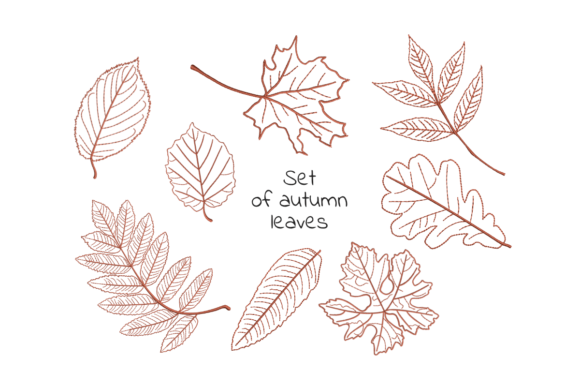
Opening the Autumn Falling Leaves embroidery file, I didn’t see just another seasonal motif—I saw movement. Three loosely clustered leaves in mid-fall, slightly overlapping, each with subtle vein detail and gentle curvature. There’s no rigid symmetry or forced uniformity; instead, it feels like catching a quiet moment outdoors—wind-tossed, unhurried, alive. The layout breathes. It doesn’t scream “fall” with pumpkins or turkeys—it whispers it through organic shape and implied motion. That makes Autumn Falling Leaves unusually versatile: not just for holiday decor, but for everyday handmade products where subtlety reads as sophistication.
Real-World Test: A Linen Tote Bag for a Local Boutique
Last week, I stitched Autumn Falling Leaves onto a natural linen tote for a small-town gift shop launching their autumn collection. No appliqué, no background fill—just the design alone, centered on the front panel. The result? Instant warmth without clutter. Customers paused. They touched the stitching. One asked, “Is that hand-done?” (It wasn’t—but the satin stitch edges and balanced fill stitch density gave it that handmade integrity.) That’s the quiet power of this design: it elevates the finished product without overwhelming the fabric or the wearer’s eye.
Where It Shines—and Where to Pause
Autumn Falling Leaves excels in projects where mood matters more than literal representation:
- Custom apparel: Works beautifully on sweatshirt cuffs, back yokes, or chest pockets—especially on medium-weight cotton or fleece. The leaf shapes read clearly even at 3.5"–4.5" wide.
- Personalized gifts: Paired with a monogram or short name on a baby blanket or tea towel, it adds seasonal charm without infantilizing.
- Embroidered patch: Clean outer edges and moderate stitch density mean it cuts and finishes well for iron-on or sew-on patches.
- Etsy seller asset: As a digital embroidery file, it’s strong in mockups—soft enough for lifestyle photos, distinct enough to stand out in a crowded “fall bundle” listing.
But here’s what I watched closely—and recommend you do too:
- Small hoop sizes: The design spreads comfortably across a 4"x4" hoop, but tightens noticeably below that. If you’re stitching on a curved surface like a cap, test placement first—the lower leaf may distort if stretched.
- Textured or stretchy fabric: On terry cloth towels or lightweight knits, use cutaway stabilizer underneath *and* topping (like water-soluble film) to keep veins crisp. Without it, fine running-stitch details can blur.
- Dark fabric: The design relies on shape and texture—not heavy contrast. On charcoal or navy, choose a thread color with slight sheen (e.g., bronze or olive metallic) to lift the form. Avoid flat black-on-black unless intentional.
- Frequent washing: While the stitch density isn’t excessive, avoid placing it over high-friction zones like bag handles or knee areas on children’s pants. It’s better suited for heirloom-adjacent pieces—pillow covers, nursery wall hangings, keepsake onesies.
What This Design Says About Your Brand—Without Words
When your customer sees Autumn Falling Leaves on a product, they’re not just registering “fall.” They’re sensing intentionality. The spacing says you edited, not just applied. The clean satin stitch edges say you value craftsmanship. The absence of clipart-style rigidity says you understand seasonal design as emotion—not decoration. For Etsy sellers and craft business owners, that builds trust faster than any description. It tells buyers: This wasn’t mass-generated. It was chosen—then stitched—with care.
That impression carries into gifting, too. I’ve shipped this design on linen pillow covers for wedding favors (paired with sage green thread), and on organic cotton baby onesies for newborn photo sessions. In both cases, recipients commented on how “calm” and “grounded” the embroidery felt—not festive, not fussy, just quietly meaningful. That’s rare in machine embroidery design—and valuable in a market saturated with loud, trend-chasing motifs.
Practical Designer Notes Before You Stitch
Before adding Autumn Falling Leaves to your next embroidery project—or listing it as part of your digital design assets—take these five minutes:
- Test on scrap fabric matching your final substrate (linen, knit, fleece) using your usual stabilizer combo.
- Check thread color contrast in natural light—not just on screen. What looks warm on your monitor may read muddy on oat-colored canvas.
- Review stitch density in your embroidery software. Look for tight clusters near leaf stems—if present, consider reducing density by 5–8% for delicate fabrics.
- Confirm hoop size compatibility before prepping production runs. If your smallest hoop is 3"x3", verify the design fits cleanly—or plan trimming.
- Inspect small details like leaf tips and vein lines in both black-and-white and grayscale mockups. If they vanish on dark backgrounds, adjust thread choice or add a subtle outline.
And one non-negotiable: confirm licensing terms. Since this is a machine embroidery design intended for commercial embroidery and digital resale, ensure your use aligns with the creator’s policy—especially if you’re bundling it into an Etsy embroidery kit or offering it as part of a custom apparel service.
Final Thought: Not Just Seasonal—Sustainable Design
Autumn Falling Leaves doesn’t feel disposable. It doesn’t chase a single trend cycle. Its strength lies in restraint: no glitter, no slogans, no forced nostalgia. That makes it unusually durable for your craft business—usable across multiple autumns, adaptable to new products (a rebranded apron line, a holiday tea towel series, a gender-neutral baby collection), and easy to integrate into cohesive branding without visual fatigue. In a landscape full of “more,” this design reminds us that sometimes, the most confident statement is a single, falling leaf—perfectly placed, thoughtfully stitched, quietly unforgettable.