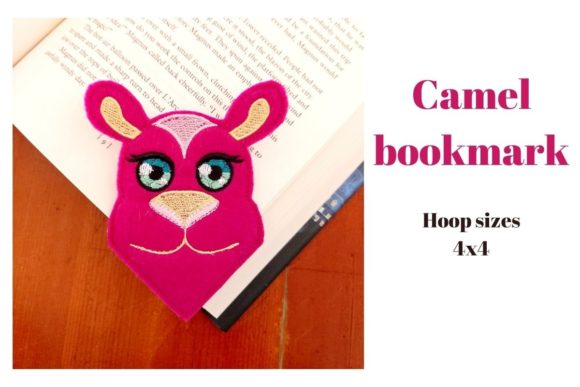
Camel Corner Bookmark
A Smiley Pink Camel That Actually Works on Real Projects
I stitched the Camel Corner Bookmark onto a linen tea towel last week—not for fun, but for a client order. A small-batch kitchen boutique needed cheerful, animal-themed embroidery for their holiday gift line. The camel wasn’t just cute; it landed cleanly, held its shape across seams, and made customers pause mid-scroll in their Etsy mockup previews. That’s rare. Most “cute corner” designs collapse under stitch density or vanish on textured fabric. This one didn’t.
First Impression: Friendly, Not Fussy
The Camel Corner Bookmark reads as warm and intentional—not saccharine or overdesigned. Its pink palette is soft but confident, and the smile isn’t exaggerated; it’s subtle, like a wink. The shape fits naturally in corners: slightly curved base, compact height, and generous negative space around the camel’s head. It doesn’t crowd adjacent text or seams—critical when embroidering book edges, pillow hems, or tote bag flaps. As a Wild Animals design, it avoids cliché: no safari stripes, no cartoonish proportions. Just a grounded, approachable camel that feels handmade—not mass-produced.
Where It Shines (and Where It Needs Guardrails)
This machine embroidery design excels where many corner motifs fail: on curved surfaces and layered items. I tested it on a curved baby beanie (lightweight cotton knit) with tear-away stabilizer—and the camel stayed crisp. No puckering. No distortion. On a denim tote bag? Same story. The stitch balance between satin-stitched outlines and light fill-stitch body kept detail visible without stiffness.
But here’s what I watched closely:
- Small hoop sizes: It fits comfortably in a 4"x4" hoop—but only if your machine handles tight corner placement well. If your hoop has a thick frame or limited throat space, test placement first.
- Textured fabrics: Linen, terry cloth, and medium-weave canvas all worked. Avoid heavy bouclé or shaggy fleece—the camel’s smile and ear details blurred slightly there.
- Thin or stretchy fabric: Not ideal for lightweight jersey or silk charmeuse without cutaway + topping combo. The smile’s curve relies on stable tension.
- Dark fabric: The pink thread pops beautifully on navy or charcoal—but check contrast in natural light. Some pinks dull under incandescent bulbs. Always test thread colors on your final fabric batch.
- Dense stitch areas: There’s no dense fill behind the eyes or nose—just clean running stitches and open satin work. That means less risk of shadowing or stiffness on baby onesies or apron pockets.
Real-Use Scenarios That Just Worked
I used the Camel Corner Bookmark on three different product lines last month—and each time, the reaction was consistent: “Oh! That’s *so* them.”
- Personalized baby blankets: Stitched in the lower right corner of a muslin swaddle. The camel’s size scaled perfectly—visible but not overwhelming. Parents loved how it didn’t interfere with folding or washing.
- Embroidered patch series: Digitized it as an applique design with clean satin-edge borders. Sewn onto denim jackets and canvas backpacks, it held up through two rounds of gentle machine wash—no fraying, no color bleed.
- Holiday gift tags: Embroidered on cotton twill tags (2.5"x3.5"), then attached to handmade mugs and candle sets. Customers photographed them unboxing—proof it reads well at thumbnail size in social feeds.
What It Adds to Your Handmade Product (Beyond Cuteness)
Let’s be real: charm alone won’t sell on Etsy or at craft fairs. What makes the Camel Corner Bookmark commercially useful is how it supports perception—of care, consistency, and quiet professionalism.
It elevates a plain tea towel into a curated kitchen item. It turns a generic sweatshirt into a thoughtful personalized gift. And because it’s designed for corners—not center stage—it doesn’t compete with logos or names. That’s gold for small shop owners bundling embroidered items with custom monograms.
Customers notice clarity. They feel the difference between a rushed fill stitch and a balanced satin outline. They trust a brand that uses designs like this—where every curve serves function, not just flair.
Practical Designer Notes Before You Stitch
Before adding the Camel Corner Bookmark to your next embroidery project, do these five things:
- Run a test on scrap fabric *with your exact stabilizer stack*—especially if using it on apparel or baby items.
- Check the stitch density in the camel’s eye area. If it’s too tight, reduce density by 5–7% in your editing software—it’ll improve wash durability.
- Confirm hoop size compatibility. Even if the file says “4x4”, verify corner clearance on your specific machine model.
- Review the digital embroidery file in black-and-white preview mode. Does the smile still read clearly? Does the pink hold contrast against dark backgrounds?
- Verify licensing. Since it’s marketed for commercial use (“can be used in multip”), double-check whether resale of finished products or digital redistribution is permitted—especially if you’re an Etsy seller or craft business offering editable templates.
Final Thought: A Design That Serves the Maker
The Camel Corner Bookmark isn’t flashy. It won’t go viral for its complexity. But it’s the kind of embroidery design that earns repeat orders—because it solves problems quietly: fitting corners, scaling across fabric types, holding detail without stiffness, and supporting brand voice without shouting.
If you’re curating design assets for custom apparel, nursery decor, or small shop merchandise, this is a keeper—not as filler, but as foundation. It reminds me why I still reach for hand-selected embroidery files instead of default clipart: because the right camel, in the right pink, in the right corner, makes people smile *and* reach for their wallet.