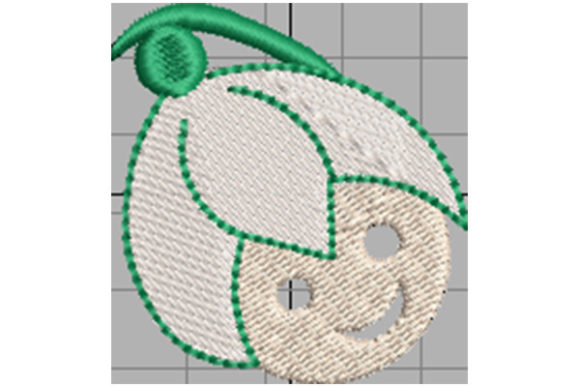
Snowdrop Lucky Charm
A Delicate Promise—Not Just a Pretty Face
First glance at Snowdrop Lucky Charm feels like spotting the first bloom after winter: quiet, hopeful, and unmistakably spring. It’s not bold or oversized—it leans into subtlety, with clean outlines, gentle curves, and just enough detail to read clearly at 3–4 inches wide. No fussy stems, no overworked petals—just one graceful snowdrop, centered and balanced, carrying that soft “lucky charm” energy without leaning into cliché. As a designer who’s stitched hundreds of floral motifs for client apparel and boutique merchandise, I appreciate how this design avoids visual noise. It doesn’t shout; it invites closer looking. That makes it ideal for products where elegance and intention matter more than impact—think baby onesies, linen tea towels, or minimalist tote bags for a local herbalist’s shop.
How It Lands in Real Projects
Last week, I prepped a custom order: six organic cotton aprons for a small-batch bakery. Their branding is warm but refined—no cartoon florals, no glitter fonts. I tested Snowdrop Lucky Charm on the left chest, sized to 3.2" wide. Stitched in matte ecru thread on oat-colored linen, it held its shape beautifully. The satin stitch petals stayed smooth, the center detail didn’t vanish into fill density, and the overall silhouette read instantly—even from across the room. Customers noticed it. Not as “cute,” but as *thoughtful*. That’s the difference between decoration and design intent.
I’ve also used it on lightweight sweatshirts (medium-weight fleece), rolled-hem baby blankets, and folded-edge kitchen towels. On all three, it behaved predictably—no puckering, no thread breaks—when paired with medium tear-away stabilizer and a size 75/11 needle. It’s not an appliqué design, so there’s no fabric layering to manage—just clean machine embroidery design execution. That simplicity saves time for Etsy sellers batching holiday embroidery orders or craft fair vendors stitching 20+ tote bag designs in a weekend.
Where It Shines—and Where to Pause
Snowdrop Lucky Charm thrives on stable, medium-weight fabrics: quilting cotton, twill, brushed poly-cotton blends, and midweight linen. It reads well on both light and dark backgrounds—but test thread color contrast first. A pale yellow on charcoal feels cheerful; the same thread on navy can disappear unless you adjust density or add a subtle underlay.
Proceed with care on:
- Stretchy knits (like jersey tees)—use cut-away stabilizer and baste first; the design’s clean lines won’t forgive shifting;
- Curved surfaces (caps or curved pockets)—hoop carefully and consider reducing size to 2.5" to avoid distortion;
- Thin or sheer fabrics (chiffon, voile)—backing shows through easily; opt for a denser fill stitch setting or switch to a lighter thread weight;
- Textured weaves (burlap, heavy canvas)—the delicate petal edges may blur; test stitch density and consider simplifying corners manually if needed.
It’s not built for tiny hoops (<3"). At under 2", fine details lose clarity—especially the subtle veining in the petals. Save it for 4"–6" hoops where the stitch definition breathes.
What It Adds to Your Handmade Product—Beyond Aesthetics
This isn’t just another embroidery file. It carries tone. When stitched onto a baby blanket, Snowdrop Lucky Charm reads as tender—not twee. On a linen pillow cover for a wedding gift? It whispers tradition and renewal, not generic “spring.” That nuance builds customer trust. Buyers of handmade goods don’t just buy stitches—they buy intention, care, and quiet storytelling. This design delivers that without needing explanation.
For small shop owners and digital product sellers, it’s versatile asset-building: use it as-is for finished goods, adapt it into a printable mockup for your Etsy listing, or pair it with simple monograms for personalized gifts. Its scale and style make it easy to brand-consistently—no awkward resizing or cropping needed across product types.
Designer Notes You’ll Actually Use
- Always test on scrap fabric first—especially if stitching on textured or dark material. Watch how the satin stitch catches light.
- Check stitch density before final run. Too dense = stiff fabric; too sparse = fragile detail. Adjust underlay if needed for stability on knits.
- Confirm hoop size compatibility. If your machine struggles with tight corners, simplify by slightly rounding inner angles in your editing software.
- Inspect small details at actual stitch-out size—not just on screen. Zoom in on the petal tips and stem base.
- Try black-and-white mockups to assess contrast and readability before choosing thread colors.
- Use proper stabilizer—as noted in the product description, fabric type dictates support. Don’t skip this step, even for “easy” projects.
- Verify licensing before selling finished items or bundling the digital embroidery file. If unclear, contact the seller directly.
Final Thought: Luck Is in the Execution
“Lucky charm” sounds whimsical—but in embroidery, luck comes from preparation, not superstition. Snowdrop Lucky Charm earns its name not because it’s magical, but because it’s reliable: predictable in stitch-out, respectful of fabric, and quietly expressive in finished form. It works for baby embroidery and holiday embroidery alike—not by forcing itself into every season, but by holding space for meaning. Whether you’re stitching a single personalized gift or scaling up for your craft business, this design supports your voice instead of competing with it. That’s rare. And honestly? That’s the kind of luck every maker deserves.