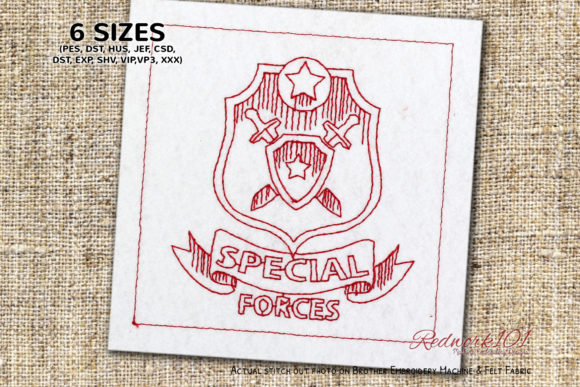
Special Forces Lineart Design
A Clean, Thoughtful Silhouette—Not Just Another Military Motif
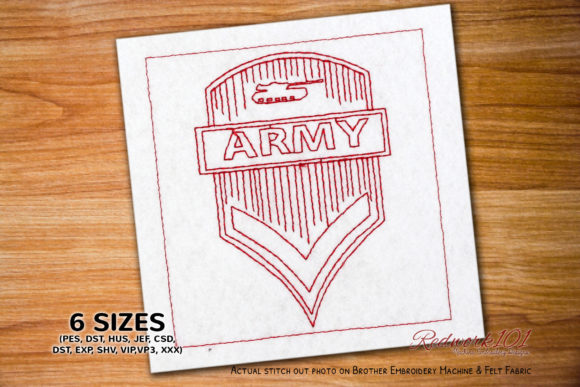
First impression? This isn’t a loud, aggressive emblem. Special Forces Lineart Design lands with quiet confidence—a precise, single-contour outline of a tactical figure in profile, rendered in classic redwork style. There’s no shading, no heavy fill stitches, no busy detail. Just clean lines, intentional negative space, and a subtle weight that reads clearly at 3–4 inches wide. It feels respectful, grounded, and human—not cartoonish or overly stylized. That matters when you’re stitching something meant to be worn, gifted, or displayed with sincerity.
Where It Shines: Real Projects, Real Customers
I recently tested Special Forces Lineart Design on a natural linen tote bag for a veteran-owned small shop. The result was instantly cohesive: minimalist but meaningful, modern but timeless. It worked beautifully as a left-chest embroidery on a heavyweight cotton sweatshirt—no puckering, no lost definition. On a baby onesie? Yes—but only on the back yoke, where the line stayed legible and soft. As an embroidered patch sewn onto a canvas apron? Perfect. The simplicity made it scale well, and the redwork aesthetic gave it warmth without looking dated.
For Etsy sellers and craft fair vendors, this design bridges niches: military families, first responders, educators who value service, even mindfulness-focused customers drawn to its calm, centered composition. It doesn’t scream “army surplus”—it whispers “purpose.” That nuance lifts the perceived value of your handmade product, whether it’s a holiday embroidery gift for a retiring officer or a boutique kitchen towel for a home goods shop.
Where to Proceed with Care
- Small hoop sizes (under 4”): The figure’s proportions hold up well, but avoid shrinking below 2.5”. Tiny elbows or boot details may blur or vanish in stitch.
- Textured or stretchy fabric: Use cutaway stabilizer—not tear-away—especially on knits or terry cloth. The line relies on precision; stretch can distort the contour.
- Dark or dense fabrics: Redwork traditionally reads best on light or mid-tone backgrounds. On charcoal or navy, test thread color contrast first—deep burgundy or charcoal-gray thread often reads more clearly than true red.
- Curved surfaces (caps, curved pillow covers): The linear nature helps, but avoid placing near seams or crowns where distortion is likely. Center-front on a structured cap bill works better than high-back placement.
- Frequent-wash items (baby clothes, tea towels): Confirm stitch density isn’t too sparse—if it’s mostly running stitch, reinforce with a light fill or satin border for durability.
Design Integrity Meets Commercial Sense
What sets Special Forces Lineart Design apart from generic military embroidery files is its restraint. In a market saturated with eagles, flags, and camo repeats, this design earns trust—not because it shouts allegiance, but because it invites reflection. Customers notice that. When used on personalized gifts or custom apparel, it signals thoughtfulness—not just decoration.
For small business owners building brand consistency, it pairs cleanly with neutral palettes and organic materials. No clashing with your existing embroidery project lineup. And for digital product sellers, it’s a strong candidate for printable mockups: the line art translates crisply into black-and-white previews, social media thumbnails, and listing banners.
Practical Designer Notes Before You Stitch
- Always run a test on scrap fabric matching your final garment—especially if using textured weaves or blends.
- Review the stitch path: Is it optimized for smooth travel? Look for unnecessary jumps or overlapping lines that could cause thread breaks.
- Check small corners and curves—they should be tight enough to read, not jagged or pixelated.
- Try it in grayscale mockups. If it loses impact without color, consider adding a subtle satin-stitched outline or shadow layer (if editing rights allow).
- Compare how it reads on light vs. dark fabric swatches—thread choice changes everything.
- Use appropriate stabilizer: medium-weight cutaway for most apparel, lightweight tear-away for stable linens or quilting cotton.
- Confirm licensing terms before selling finished products or bundling as part of a digital embroidery file pack—especially for commercial embroidery or resale use.
Final Thought: Less Is Meaningful Here
This isn’t a flashy machine embroidery design built for attention-grabbing. It’s a considered piece—ideal for makers who understand that emotional resonance often lives in the quietest lines. Whether you’re stitching a commemorative pillow cover, designing a limited-run sweatshirt for a nonprofit, or curating a thoughtful Etsy collection, Special Forces Lineart Design delivers clarity, dignity, and quiet strength. It doesn’t need embellishment. It needs intention—and that’s exactly what makes it work so well in real life.